Showing posts with label India. Show all posts

Friday, August 14, 2009

BusinessWeek Blows it on India

The Communists may be gone, but the Trinamool Congress Party isn't much better! West Bengal is struggling and all Trinamool has to show is running out Tata and good jobs, but that's not the story out of BusinessWeek.

Mehul Srivastava writes, wrongly:

With its Communist leadership out, the former Calcutta is poised for quick growth

It would appear that Mr. Srivastava hasn't read any of the articles written about the poverty pimps of the Trinamool Congress Party, particularly the Premier of Poverty, Mamata Banerjee.

For review, here are the articles I have written on the subject (here, here, here, and here). Clearly, you will find that Trinamool and Banerjee are not friends of business, nor are they true friends of the poor. Rather, they are true friends of power and themselves! Great fares to Europe and beyond on Air France!

It is quite a laugh to read Banerjee's statement:

Unless [the Communists] are ousted from power, no development is possible in West Bengal.

While there may be some truth in that statement, it has more to do with Banerjee and her cronies finding a way to line their pockets than it does with the Communists. Let's be clear, communism has never delivered on any of its promises, except for tyranny. West Bengal is proof of that, particularly, as BusinessWeek gets right, "Corruption, electricity shortages, and a rejection of foreign capital have left the city in rough shape."

Includes 300 FREE Fax Pages per month

However, BW gets it wrong when they claim the Communists "seized" land. The farmers were to be paid for their land, and Tata was going to provide new, better paying jobs for the regrettably poor subsistence farmers. At least until Banerjee organized a violent mob.

While there is no evidence that either she or her party were involved in a plant manager's murder, Banerjee was behind the agitation directed at Tata Motors in Singur.

Cheap? No. 100% Free. Trade stocks for free on Zecco.com. The Free Trading Community. www.zecco.com

For now, the problem of good government isn't solely the realm of West Bengal. Rather, it is a great shame that so many suffer at the hands of petty politicians. People are living in grueling poverty, subsistence farming, dirty water and limited educational opportunities. Perhaps Trinamool can stand up to encourage a positive business climate that will create a tide of prosperity. Sadly, they won't, as a struggling underclass provides them what they love most, power.

Click Here to Protect your Identity with TrustedID

Friday, July 24, 2009

India Rejects Carbon Bullies

It should come as no surprise that I find all of the panic and hysteria around "global warming," wait, now it just "climate change," utter nonsense. Fortunately, India holds the same view and has told the EU carbon bullies to take a hike.

The Financial Times online reports:

India rejected key scientific findings on global warming, while the European Union called for more action by developing states on greenhouse gas emissions.

Great fares to India on Air France!

I say good for India! Much of the so-called science around "climate change" has either been debunked, disputed, or just plain junk! What really is happening is the EU and developed-world hand-wringers are busy trying to protect their economic backsides from rapidly-developing BrIC (Brazil, India, China).

Guard against ID Theft with 15 Points of Protection from TrustedID, including our $1,000,000 Warranty. Click Here!

All of the Kyoto climate regulations aim at reducing emissions (not a bad thing), but for the developing world, that means reducing its ability to grow their manufacturing economies. Although I encourage clean air, clean water, and healthy working conditions, developing countries currently lack the resources to accomplish all three. Instead, they have to work to improve their economies to afford expensive pollution controls, municipal water treatment, and modernized plants.

How’s your credit score? 0-600 Poor, 601-680 Fair, 700-774 Good, 775+ Excellent. Find out your Score now FREE!

Although the other angle being played here is over financing for emission reductions, I think the bigger issue is that the science doesn't support the dire claims of climate cry-babies.

From the article:

Mr Ramesh on Friday reiterated that India would not accept emissions caps to held curb global warming, Bloomberg reported. “The world has nothing to fear from India’s development ... An artificial cap is not desirable and not even necessary as we haven’t been responsible for emissions in the first place,” he said.

I agree with Mr. Ramesh on this issue and support India's stance. As a sovereign, responsible nation, it must do what is best for its citizenry. In the case of India, it is to promote economic prosperity, freedom, and safety. While I hope India will more seriously address the need for clean drinking water, I do understand that things take time.

Internet Fax

Wednesday, July 8, 2009

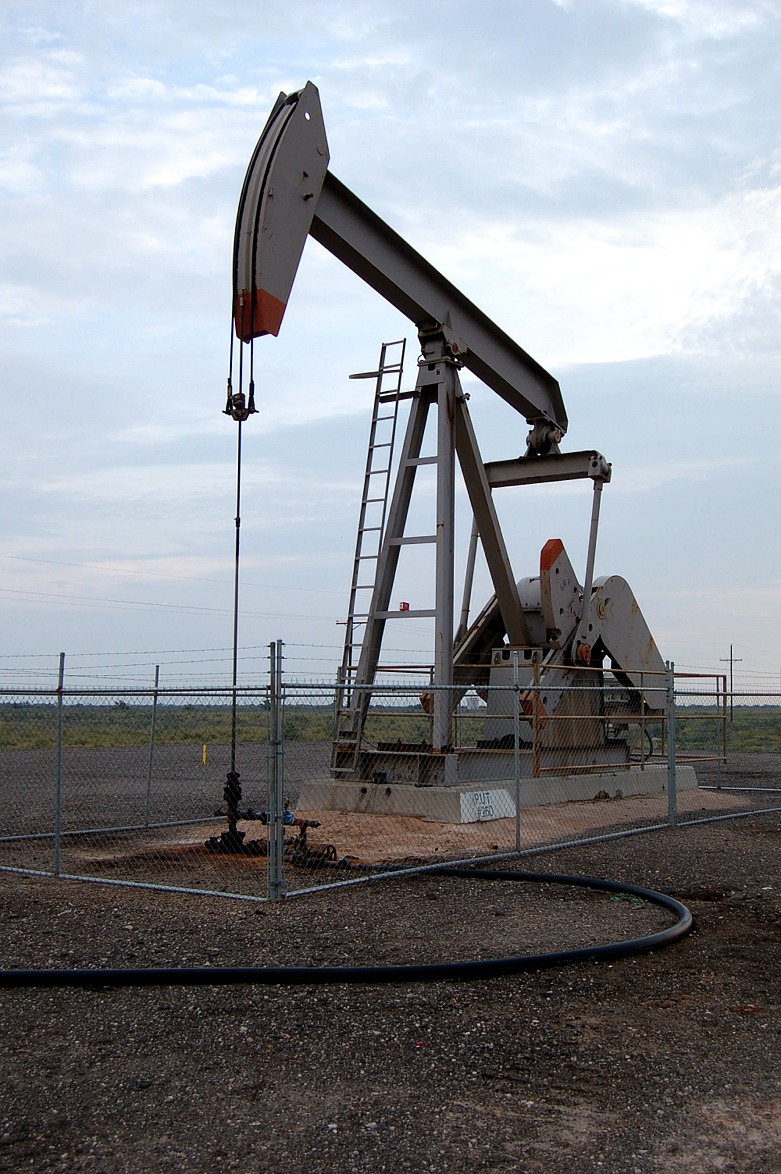
The Changing Game of Oil

Up until 2009, the oil blame game began just before Memorial Day in the US. Politicians would line up to paint oil companies as greedy price fixers, jacking up the price of gasoline before the summer driving season. What a difference a year makes.

Politicians being what they were (and still are), chose not to acknowledge that increased demand for a scarce resource leads to increased price. Most of us older than 4 understand patterns. Summer is when Americans drive the most. Thus the increased demand for gasoline and the increased price.

However, in the 2009 global recession, the price of oil is less than half of its 2008 record ($145 bbl). Why has the price fallen so much? Because oil is a leading economic indicator, meaning that its market price is a prediction of demand one month in the future. The market correctly believed(s) that the global economy would tank.

Oil prices have fallen since last year, down as low as $34, then settling in to the $70s, as of 08 July 2009, it is down in the lower $60s. Obviously, the case for price fixing is quite flimsy, or so it would seem. How’s your credit score? 0-600 Poor, 601-680 Fair, 700-774 Good, 775+ Excellent. Find out your Score now FREE!

While we aren't hearing the usual cast of characters demanding ExxonMobil and Chevron's chairmen explain why gas is more expensive, we are hearing cries of "Speculation!"

In the 08 July 2009 edition of the Wall Street Journal, the article starts:

"Policy makers on both sides of the Atlantic launched an effort to crack down on what they called speculation in oil markets, underscoring concerns that a sharp rise in oil prices could worsen the global economic downturn."

Perhaps Gordon Brown and Nicolas Sarkozy should take a deep breath and just try to control their instinct to regulate. Not to be outdone, Sen. Byron Dorgan (D-ND) declares the need to control "...oil speculators looking for a quick buck at the expense of the American consumer."

As I have written previously, traders in oil futures are airlines, utilities, and others who consume a regular supply of oil over a year and are trying to smooth out price variability. Sounds pretty reasonable to me. Additionally, since oil is a global commodity, denominated in US dollars, its price fluctuates with the value of the dollar. Inflation in the US spells higher oil prices, and conversely, recession or deflation spur lower oil prices. Of course, the 800lb gorillas in the room are China and India, as their consumption grows annually. Cheap? No. 100% Free. Trade stocks for free on Zecco.com. The Free Trading Community. www.zecco.com

Does the trade of a global commodity need to be regulated? Only if it means the enforcement of contracts! Since oil hasn't followed its usual trends, government officials are struggling as how to propose more regulation. While oil is a critical component in the global economy, demands to regulate its future sale will only wreak havoc. Oil is generally an efficient market, though it is subject to swings. By allowing the swings and the pain it causes, the market will right itself, and hopefully teach important lessons. When government interferes and distorts the market, the swings are wilder and damage greater. Just look at housing bubble. Need I say more?

Switch to Allstate and Save!

Monday, March 23, 2009

Tata Releases the Nano, No Thanks to Mamata Banerjee

Hooray for Tata Motors! The BBC reports that the Nano, known as the world's least expensive car, will go on sale in India within the next 10 days (As of 23 March 2009).

Great fares to India on Air France!

Additionally, "A slightly bigger European version, the Nano Europa is due to follow in 2011, and is expected to cost nearer to £4,000. " All of this, no thanks to petty politician and poverty pimp Mamata Banerjee.

In my previous writings about the Nano saga, (here, here, and here) Banerjee and her ilk agitated destitute dirt farmers to protest against Tata to keep them from building the Nano plant in Singur. In addition to killing a supplier factory head, the goons also ran off what could have been over 4000 new factory jobs. Banerjee and her Trinamool Congress Party have forced the road to prosperity to detour to Gujarat. Compare Auto Insurance Quotes and Save!

In the end, the market prevailed. Tata built its car in Gujarat and now a whole generation of people will be able to own their own cars and the freedom of movement that entails. Additionally, people with the Nano will be able to increase their businesses that were previously relegated to scooters or animal-drawn carts. People's lives have been improved not by poverty pimps like Mamata Banerjee, but by a big corporation, Tata Motors.

Easy cars loans from DriveTime


Friday, November 7, 2008

Keeping India Poor, One Company at a Time

**UPDATE: Tata Releases Nano to India!**

With the world's second largest population, India also has one of world's largest populations in poverty, no thanks to Mamata Banerjee and her anti-business politics.


As a an Indian MP, and member of Trinamool Congress Party, Banerjee was a leader in the violent protests against Tata Motors and the building of their Nano plant in Singur. See "Tata Motors Says "Tata" to Singur" for more information.

If that wasn't bad enough for the economically depressed city of Singur, now Banerjee announced that she would lead anti-industrial protests across Communist-led West Bengal. Further, some of her ilk would like to see her take this campaign industrial suicide nation-wide.

According to The Wall Street Journal, on 05 Nov 2008,:

"...she (Banerjee) voiced her opposition to land acquisition for a power plant, a shipbuilding yard and a technology park in the state... She said she intends to keep up pressure on Tata and wants it to return any loans it got on favorable terms from the state."

Is this what India needs? Fewer manufacturing jobs, less technology, and more subsistence farmers? These companies and opportunities will help West Bengal improve the standard of living for all who live there. Infrastructure will have to be improved, which is one of Banerjee's complaints. New jobs and job training benefits the entire population. However, Banerjee, who is wed to foolish notion that subsistence farming is somehow more virtuous than working in industry, and is willing to exploit for political gain, is deserving of great contempt.

Every country in the world that has transitioned away from primarily agrarian economy to an industrial economy has felt this type of pain. It is not easy, but is best for the well-being of the country as a whole. It is a matter of efficiency. Farming on a large scale is more efficient and requires fewer workers. Those workers could be trained to take higher paying industrial or technology jobs. Higher wealth creates a higher standard of living and demands for better services from the government, such as clean water, power, and environment. Has Trinamool Congress Party of the Communist done that for Kolkata or Singur?? I think not.

India, don't let Banerjee and her brand of populism stop your country from being its best. Men like Ratan Tata have the right idea to improve the country. Industrial growth, while not perfect, offers a better life for the poor and their families. Don't be slaves to populist politics or subsitence farming, but be free to explore the possibilities of an improved economy.

Monday, October 13, 2008

Tata Motors Says "Tata" to Singur

Tata Motors, who is building the world's least expensive car, the Nano, has finally fled business unfriendly Singur, in West Bengal, for Sandand in Gujarat. I have written two other articles about this topic, "Indians are Bad for Indian Business" and "India, When it Can't Get Any Worse."

In a press release dated October 7, 2008, Tata states:

"The integrated project, ... will come up on an area of about 1100 acres. The plant, ... will produce 250,000 cars per annum. The capacity is expandable up to 500,000 cars per annum. The project, including Tata Motors’ plant, vendor facilities and service providers, will together generate over 10,000 direct and indirect jobs."

I guess poverty is what local politicians had in mind for the populace, and poverty they will continue to enjoy. When will Indians learn that the way to move a country forward is through a positive business climate, and not one ruled by tin-pot, local politicians?? Gujarat seems to have learned that simple lesson, while West Bengal hasn't. It is a shame for the poor who are left to suffer.

Thursday, September 25, 2008

India, When it Can't Get Any Worse

In a previous article titled, "Indians are Bad for Indian Business," I wrote about how local farmers are protesting to keep Tata Motors from building the world's least expensive car (the Nano), and giving the locals good paying jobs. Makes sense, right? Keep yourself chained to dirt farming and forget about improving your life and the life of your family.

Well, it gets worse. In the 23 September issue of The Times Online, there was an article titled, "CEO Murdered by Mob of Sacked Indian Workers." The company, Graziano Transmissioni, is an Italian firm making parts for the Tata Motors Nano, that was to be built in Singur (see previous article, link above). From the article:

Lalit Kishore Choudhary, 47, the head of the Indian operations of Graziano Transmissioni, a manufacturer of car parts that has its headquarters in Italy, died of severe head wounds on Monday after being attacked by scores of laid-off employees, police said.

Further, from the article:

It is understood that Mr Choudhary, who was married with one son, had called a meeting with more than a hundred former employees who had been dismissed after an earlier outbreak of violence at the plant. He wanted to discuss a possible reinstatement deal.

So, if you get fired, and the boss is looking to re-hire you, your best move is to beat him to death, leaving a widow and young son. Brilliant! Murder is a great way to garner sympathy.

Who would advice this course of behavior or promote this attitude? Well look no further than Oscar Fernandes, Minister of Labour and Employment. From a linked story in the Times, "...declined to criticise the attack, saying it “should serve as a warning for management”. "

If Indian wishes to remain a second-class citizen in the world of commerce, it will continue to elect and promote politicians like Fernandes who promote violence and Marxist labor principles. Violence has no place in an orderly society. While workers deserve fair treatment and the dignity due all people, management deserves not to have their lives threatened over working conditions. Who do these guys think they are, Teamsters?

Wednesday, September 3, 2008

Indians Are Bad for Indian Business

*Make sure to read the update, "India, When it Can't Get any Worse" found here.*

Huh? In today's The Wall Street Journal print edition, there is an article titled, "Protests in India Push Tata to Stop Building Car Plant." (03 Sept. 2008, A8).

Tata Motors has a design and wants to build the world's cheapest car, the Nano. Priced around $2500, "...the minicar has been touted around the world as revolutionary." It is revolutionary mainly because of its price point, but also because of its Indian construction for global consumption.

However, some farmers near the proposed "...plant in Singur, in the eastern state of West Bengal, about 25 miles from Kolkata..." are upset that they have "lost" their land. Lost is a relative term. Tata purchased 1000 acres from farmers, though some decided not to accept the money. Instead, they are organizing with other farmers and politicians to demonstrate against the plant.

This is only the beginning of the incongruity. From the article, "...Tata is known as one of India's most powerful, yet socially responsible employers." Additionally, the building of the plant brought over 4,000 jobs to the depressed area. The total investment was about $345 million, and 60 suppliers were setting up to support the plant and production. All of this was promoted by the local ruling party, the Communist Party of India (Marxist).

Confused yet? A benevolent corporation, setting up shop in a poor area, with good jobs (close to 20,000 new jobs), supported by the Communists (of all people), is seriously considering closing their plant because very poor people (subsistence farmers) want to stay poor. Of course, local politicians are in on the action, "... to portray the Communists as insensitive to the interests of small farmers and local constituents."

It gets better. If Tata pulls out, it is almost guaranteed that no new investment will come into the state, leaving Mitsubishi Chemical Corp the loan survivor. Breathtaking, isn't it? By far, this has got to be one of strangest stories I have read in a long time. Communists are trying to improve the economy with private investment. The poor want to stay poor. A car made for poor people won't be made because the poor are protesting a factory and 20,000 new jobs.

Good job, protesters in Singur! Enjoy poverty!

Two things are infinite: the universe and human stupidity; and I’m not sure about the universe.- Albert Einstein (Hat tip to stuckon-stupid.com)

Wednesday, July 30, 2008

Nuclear, India Style

India is not only one of the world's largest countries by population, it is also on of the largest consumers of electricity. However, India suffers insufficient power generation and distribution networks, making stable and continuous power a very hard target.

In the July 24 issue of Business Week, titled "All Eyes on India's Nuclear Prize," the article, while focused on who is getting business to build 30+ reactors, also spells out India' commitment to clean, nuclear energy.

When it comes to spending about $100 billion of government money, one can bet on controversy. Additionally, when that money is to spent on building safe, reliable, clean, nuclear plants, one can count on the leftists to scream the loudest.

So, should one be suprised when the article states, "Communist members of Singh's coalition opposed it and walked away from the government, forcing a confidence vote on July 22." If one followed the news, they would see that Singh survived the confidence vote.

Lest anyone question the need India has for power, consider this quotation:

"And as the economy expands, New Delhi hopes to quintuple nuclear energy production. "Demand for electricity is so large," says R.B. Grover, India's chief negotiator for the nuclear deal, "that we can accommodate all countries" willing to help build capacity.

All the best to India and its nuclear power expansion. If they are successful, perhaps the can reduce the number of coal and oil plants and really reap the fruits of clean, safe, and reliable, nuclear power.

Friday, July 11, 2008

Global Warming, Mental Disorder?


When discussing the latest "crisis," whether its global warming, global cooling, el Nino, la Nina, etc., the discussion can be taken to an extreme.

In an article from the Herald Sun of Australia, titled "Doomed to a fatal delusion over climate change," a poor child was diagnosed with "Climate Change Delusion." Allow me to first offer my deepest and sincerest concern for the welfare of the child and his family. However, I am discussing this article because of the often irrational nature that global warming and "carbon" believers display.

Andrew Bolt writes:

Writing in the Australian and New Zealand Journal of Psychiatry, Joshua Wolf and Robert Salo of our Royal Children's Hospital say this delusion was a "previously unreported phenomenon".

"A 17-year-old man was referred to the inpatient psychiatric unit at Royal Children's Hospital Melbourne with an eight-month history of depressed mood . . . He also . . . had visions of apocalyptic events."

Although Mr. Bolt is writing an editorial, he seems to identified some pretty clear characteristics that have recently been displayed by both US and Australian government leaders. US Senate Majority Leader Harry Reid (D-NV) said, "...coal makes us sick, oil makes us sick..." as he discussed the need for alternative energy to replace fossil fuels (good grief!).

Not to be outdone, the Prime Minister of Australia, Kevin Rudd said:

"If we do not begin reducing the nation's levels of carbon pollution, Australia's economy will face more frequent and severe droughts, less water, reduced food production and devastation of areas such as the Great Barrier Reef and Kakadu wetlands."

What empirical evidence does he give for this frightening scene? None specifically, just the advice of another green advocate, Professor Ross Garnaut:

"Australians must pay more for petrol, food and energy or ultimately face a rising death toll . . ."

Wow, it becomes clear, doesn't it. These folks have a vision about how they want people to live. Most people don't agree with that vision, so Rudd and Garnaut are trying to scare people into believing they are in danger and will have to part with their own wealth and lifestyle to fit the deluded visions of the disciples of green.

So, what do China and India, the world's biggest polluters, say about this?

...Ma Kai, head of China's powerful State Council: "China does not commit to any quantified emissions-reduction commitments . . . our efforts to fight climate change must not come at the expense of economic growth."

From India,

... the Prime Minister's Council on Climate Change, said India would rather save its people from poverty than global warming, and would not cut growth to cut gases."

In other words, green ideas and carbon cutting are not in the best interest of the developing world. It is refreshing to see governments exercise enlightened self-interest and the well-being of its citizens as guideposts for policy decisions. When will liberal guilt in the West end and common sense return? Soon, I hope.

Thursday, July 3, 2008

Progressive, Socialist, What's the Difference?

Many of the topics I have written about so far have been darlings of the "Progressive" movement. These leftists, many of whom refer to themselves as socially conscious, may not be aware of the very tight correlation of their personal views and those of socialists around the globe. While many of the personal goals and feelings of progressives are noble, they often fail to understand the consequences of policies associated with their goals.

Here is an interview from YouTube, conducted by John Stossel of ABC News. It starts out with a general discussion of employment, starting with Europe. The title of the video is inaccurate, but enjoy it anyway.

Peace and Freedom for Iran!
Respect Life, Defend the Weakest Among Us!

ShareThis